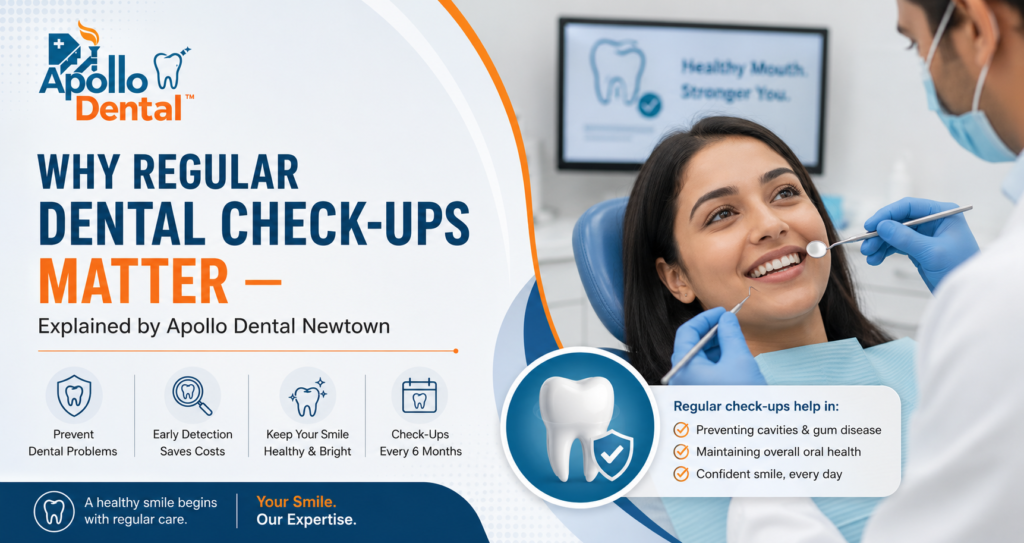
Your teeth may look perfectly healthy in the mirror, but your mouth can tell a different story beneath the surface. Early enamel damage, changes in gum health, and deposits around difficult-to-clean teeth are not always easy to recognise at home. Waiting until discomfort appears can mean missing an opportunity to address a problem at an earlier stage.
Regular dental check-ups offer a practical way to understand what is happening inside your mouth before minor concerns interfere with eating, speaking, or smiling. At Apollo Dental Clinic, Newtown, Kolkata, patients can discuss their oral health concerns, receive a professional assessment, and learn how to maintain their teeth through consistent preventive care.
What Is the Importance of Regular Dental Check-Ups?
The real value of a dental check-up is not limited to finding cavities. It provides an opportunity to assess the condition of your teeth, gums, existing dental work, and overall oral hygiene.
Even people who brush regularly may develop problems because certain tooth surfaces are difficult to reach. Food particles and bacterial deposits can collect around the back molars, between teeth, and near the gumline. If these deposits remain, they may contribute to decay or gum inflammation.
A routine examination helps your dentist recognise changes, explain potential risks, and recommend appropriate next steps. Depending on your needs, this may involve preventive advice, professional cleaning, monitoring, or treatment.
Think of a check-up as a maintenance appointment for your smile: the aim is to understand your oral health and respond to concerns before they become more complicated.
Why Are Regular Dental Visits Important When Nothing Hurts?
Pain is not a reliable measure of dental health. Some problems progress quietly, producing few noticeable symptoms until the affected area becomes more seriously damaged.
For example, early tooth decay may not cause sensitivity. Gum disease can begin with subtle redness or bleeding, which people sometimes dismiss after brushing. A chipped filling or gradual tooth wear may also go unnoticed during everyday activities.
Regular dental visits allow a professional to examine these changes and determine whether they need attention. They also give you a chance to discuss concerns you might otherwise overlook, such as persistent bad breath, sensitivity to cold drinks, or bleeding while flossing.
For families and professionals living around Newtown, arranging preventive appointments in advance can make oral healthcare easier to manage alongside work, school, and other responsibilities.
What Happens During a Regular Dental Check-Up?
Knowing what to expect can make your appointment feel more straightforward. The exact process depends on your symptoms, dental history, and examination findings.
1. A Conversation About Your Oral Health
Your dentist may ask about previous dental procedures, sensitivity, discomfort, bleeding, medication use, and changes in your mouth. This discussion helps identify concerns that deserve closer attention.
Mention habits such as smoking, frequent sugary snacking, or teeth grinding when relevant. These details can influence your preventive care recommendations.
2. A Detailed Examination of Your Mouth
The dentist examines your teeth for visible decay, cracks, worn areas, and problems with existing fillings or crowns. The gums are checked for inflammation and other signs of possible periodontal disease.
Your dentist may also examine the tongue, cheeks, and other oral tissues for unusual changes. Any suspicious finding may require further assessment rather than an immediate conclusion.
3. Checking Areas That Need Extra Attention
The back teeth, spaces between teeth, and gum margins can be challenging to clean thoroughly. Your dentist pays attention to areas where plaque tends to accumulate or where earlier dental problems have occurred.
If necessary, gum measurements or other clinical assessments may be used to evaluate periodontal health.
4. X-Rays When Clinically Appropriate
A visual examination cannot reveal every problem. Dental X-rays may be recommended to investigate suspected decay between teeth, assess certain roots, or examine areas hidden beneath the gums.
However, imaging is not automatically required at every visit. Your dentist considers your symptoms, history, previous images, and clinical needs before recommending it.
5. A Personalised Care Plan
After the assessment, your dentist explains the findings and discusses suitable recommendations. These might include changes to your cleaning routine, professional scaling, further investigations, or treatment for an identified problem.
You should have an opportunity to ask questions and understand why each recommendation may benefit your oral health.
How Preventive Dental Care Helps Protect Your Teeth
Everyday brushing is essential, but it cannot remove every hardened deposit. Plaque that stays on teeth can mineralise into tartar, which generally needs professional removal.
If your dentist identifies significant deposits, scaling may be recommended. Polishing may also be performed when appropriate to remove certain surface stains and smooth the cleaned surfaces.
Preventive care can also include advice about fluoride toothpaste, cleaning between teeth, reducing frequent sugar exposure, and choosing habits that support healthier gums.
These measures work together. A professional appointment does not replace daily brushing; instead, it helps you make your home routine more effective and identifies areas requiring additional attention.
Can Dental Check-Ups Help Detect Gum Disease Early?
Yes. Routine examinations can help identify warning signs such as gum redness, bleeding, tenderness, recession, and changes in the tissues supporting your teeth.
Gum disease does not always cause substantial pain in its early stages. Without appropriate care, some forms can progress and damage the structures that hold teeth in place.
Your dentist can assess the condition of your gums and recommend suitable care. Early inflammation may respond to improved oral hygiene and professional cleaning, while more advanced disease may require specialised periodontal treatment.
Similarly, examinations can identify suspicious areas of tooth decay before extensive damage develops. Early detection does not guarantee that treatment will always be simple, but it can improve opportunities for timely intervention.
How Frequently Should You Schedule a Dental Visit?
There is no single appointment schedule that suits every patient. Six-monthly check-ups are common, but the appropriate interval depends on your oral health, previous dental problems, gum condition, and individual risk.
Someone with healthy gums and a low risk of decay may need a different schedule from someone who experiences recurring cavities, significant tartar accumulation, or periodontal disease.
Children and adults with particular oral health concerns may also benefit from individualised follow-up plans. Ask your dentist when you should return and what factors determine that recommendation.
Dental Warning Signs You Should Never Ignore
Routine appointments are important, but certain symptoms deserve attention before your next scheduled visit. These include repeated toothache, new or persistent sensitivity, bleeding gums, facial swelling, a broken tooth, and a mouth ulcer that does not heal.
Arrange a dental assessment if you notice these changes, particularly when symptoms persist or worsen. Facial swelling accompanied by fever needs urgent assessment. Difficulty breathing or swallowing requires emergency medical care.
Avoid attempting to diagnose a dental problem from symptoms alone. A professional examination helps establish the likely cause and appropriate treatment.
Apollo Dental Newtown: Making Preventive Care a Priority
Looking after your smile becomes more manageable when you understand your current dental health and know which steps to take next. Apollo Dental Clinic, Newtown, Kolkata, is a place to discuss your concerns, receive a dental assessment, and learn about suitable preventive or treatment options.
Whether you have not visited a dentist for some time or simply want to maintain your current oral health, a routine consultation can help you make informed decisions.
Rather than treating dental appointments as something reserved for emergencies, consider them an ongoing part of personal healthcare.
FAQs:
What is the importance of regular dental check-ups?
They help assess oral health, identify developing problems, evaluate gum condition, and determine whether professional cleaning or further treatment is appropriate.
Why are regular dental visits important?
Dental visits can reveal concerns that are difficult to recognise at home. They also provide personalised guidance for preventing decay, maintaining healthy gums, and caring for existing dental restorations.
What happens in a regular dental check-up?
Your dentist discusses your history, examines your teeth and gums, investigates relevant symptoms, and recommends additional tests or cleaning when necessary.
Can I skip a check-up if I brush and floss every day?
Good home care is essential, but it cannot replace a professional examination. Your dentist can assess areas you cannot easily inspect and recommend a suitable review schedule.
Are dental X-rays necessary at every appointment?
No. X-rays are recommended when the clinical information is needed to assess a concern or guide treatment. The decision depends on your individual circumstances.
Take the Next Step Towards a Healthier Smile
Your oral health deserves attention even when everything seems normal. Book a consultation with Apollo Dental Clinic, Newtown, Kolkata, to discuss your dental care needs, understand your current oral health, and plan appropriate preventive care. A consistent approach today can help you protect your smile for the future.
Read More: