A chipped tooth, a weakened molar, or an empty space after tooth loss can affect much more than your smile. You might find yourself avoiding certain foods, feeling uncomfortable while speaking, or becoming conscious of your teeth in photographs. Fortunately, modern dentistry offers several ways to address these concerns.
Two options you may hear about during a dental consultation are crowns and bridges. Although they can look similar, they serve different purposes. If you are comparing dental crown vs bridge in Newtown Kolkata, the first step is understanding what your tooth actually needs: protection, replacement, or both.
At Apollo Dental Clinic, a dental assessment can help determine which restoration is appropriate for your oral condition and long-term comfort.
Start With the Problem: Is the Tooth Damaged or Missing?
Imagine two different situations. In the first, a large portion of your back tooth has broken, but the root and remaining structure may still be usable. In the second, a tooth is completely missing, leaving a gap between neighbouring teeth.
These situations require different approaches.
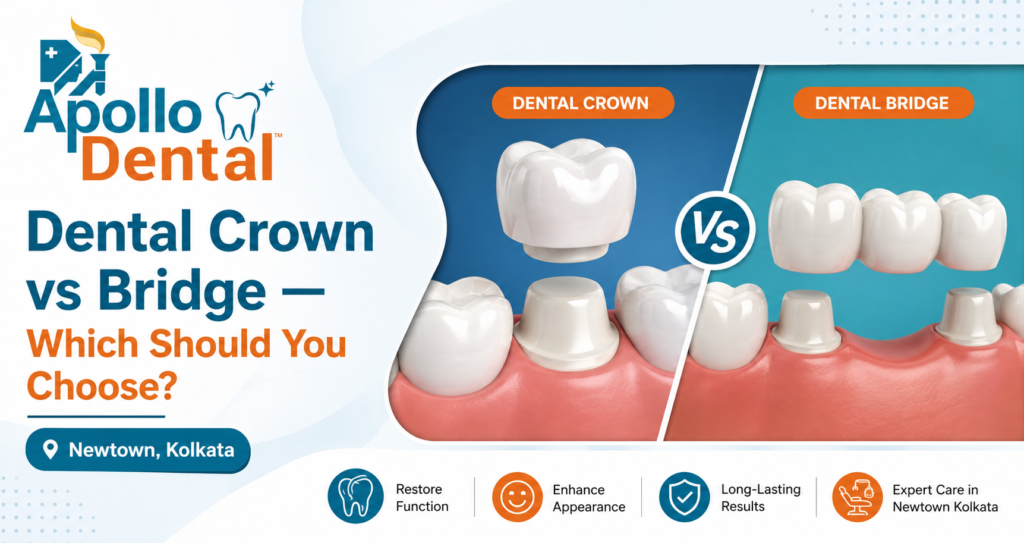
A dental crown is designed to restore a tooth that remains present but needs additional support or coverage. A dental bridge replaces a missing tooth by connecting an artificial tooth to suitable supporting teeth or implants.
This distinction is important because choosing a restoration simply because it looks attractive may not address the underlying problem. Your dentist needs to examine the affected area, assess your bite, and check the health of your gums before recommending treatment.
Dental Crowns: Giving a Vulnerable Tooth Another Chance
Think of a dental crown as a protective outer covering for a tooth that has become structurally weak. It is custom-made to fit over the prepared tooth, restoring its shape and helping it withstand normal chewing forces.
A dentist might consider a crown when a tooth has suffered extensive decay, developed a significant fracture, or lost considerable structure through previous dental treatment. Depending on the circumstances, a crown may also improve the appearance of a tooth with noticeable shape or colour concerns.
Available materials include ceramic, zirconia, porcelain-based options, and certain metal-containing restorations. The most suitable choice depends on the tooth’s position, aesthetic expectations, bite pressure, and clinical requirements.
A crown cannot repair every damaged tooth. If the tooth is too severely compromised, another treatment may be necessary. An examination helps establish whether preserving it is realistic.
Dental Bridges: Restoring the Space Left by a Missing Tooth
Losing a tooth can change how neighbouring teeth meet when you bite. Depending on the location and extent of tooth loss, it may also affect speech, food chewing, and confidence when smiling.
A dental bridge offers one way to fill that space. It contains a replacement tooth supported by adjacent prepared teeth or, in some designs, dental implants.
Traditional bridges use neighbouring teeth as anchors. Implant-supported bridges rely on implants placed in the jawbone, so the treatment process differs. Your dentist will consider the condition of the surrounding teeth, available bone, gum health, and number of missing teeth before recommending a design.
A bridge is fixed in place rather than removed for everyday use. However, cleaning beneath the artificial tooth requires special attention because ordinary brushing alone may not remove all trapped food and plaque.
Crown vs Bridge: Which One Fits Your Situation?
The decision becomes clearer when you look at the purpose of each restoration.
Consider a crown when:
- A damaged tooth can still be preserved.
- The remaining structure needs additional protection.
- A tooth requires a restoration designed to withstand chewing.
- Your dentist determines that full coverage is appropriate.
Consider a bridge when:
- One or more teeth are missing.
- Suitable supporting teeth or implants are available.
- You want to explore a fixed replacement rather than a removable appliance.
- Your dental examination supports this treatment option.
A bridge is not necessarily the next step after every extraction, and a crown is not automatically the best solution for every weakened tooth. In selected cases, implants, fillings, onlays, or removable dentures may be more appropriate.
Is It Better to Get a Bridge or a Crown?
Neither treatment is universally better because they address different dental needs. Comparing them without considering the condition of your teeth can lead to the wrong conclusion.
For example, if a tooth is damaged but can be restored, removing it simply to place a bridge may be unnecessary. Conversely, placing a conventional crown on an empty space will not replace the missing tooth.
There is another important consideration: a traditional bridge may require reshaping the supporting teeth. If those teeth are healthy, your dentist should explain the implications and discuss suitable alternatives.
Before agreeing to treatment, ask which problem the restoration will solve, what other options are available, how much natural tooth structure must be altered, and what maintenance will be required.
Why Do Dentists Push for Crowns?
A recommendation for a crown can sometimes seem excessive, especially when the tooth does not hurt. However, pain is not a reliable measure of how much structural support a tooth needs.
A heavily restored tooth may have thin remaining walls that are vulnerable to fracture. In such cases, a crown may provide useful coverage and protection. Some teeth treated with root canal therapy also need a crown, depending on how much structure remains and where the tooth is located.
Still, crowns are not compulsory for every cavity or every root canal-treated tooth. Smaller defects may be managed with more conservative restorations.
If you are unsure about a recommendation, ask your dentist to show you the affected area and explain why the proposed treatment is preferable to alternatives. Seeking a second professional opinion is reasonable when you need greater clarity.
Is Fixing a Dental Bridge Painful?
The process is generally manageable with local anaesthesia. During preparation for a traditional bridge, the dentist numbs the relevant teeth and surrounding tissues to minimise discomfort.
Afterward, you may notice temporary sensitivity, gum tenderness, or an unfamiliar feeling when biting. These symptoms should be monitored, particularly if they become stronger instead of gradually improving.
An implant-supported bridge involves additional procedures and may have a different recovery experience. Your dentist can explain the likely stages before treatment begins.
If the completed bridge feels unusually high when you bite, causes persistent pain, or becomes loose, arrange a dental review rather than attempting to adjust it yourself.
How Long Can Crowns and Bridges Last?
There is no guaranteed lifespan for either restoration. Longevity depends on the material, the quality of the supporting tooth or teeth, bite habits, gum health, and daily cleaning.
A crown can develop problems around its edges or underlying tooth. A bridge may be affected if a supporting tooth develops decay, the gums deteriorate, or the restoration becomes damaged.
Protect your investment by brushing twice daily with fluoride toothpaste, cleaning between teeth, and attending regular dental examinations. Your dentist may recommend specialised brushes or flossing aids for areas beneath a bridge.
What Determines the Cost in Newtown Kolkata?
The price depends on the restoration’s design, material, number of teeth involved, laboratory work, and any additional procedures required. A single crown and a multi-unit bridge involve different amounts of work, so their costs should not be compared as though they provide the same service.
Implant-supported options may involve separate surgical and restorative expenses. An examination at Apollo Dental Clinic can help establish the treatment required and provide a more relevant estimate.
Ask for a clear breakdown covering the restoration, preparation, follow-up visits, and any additional treatment recommended.
FAQs:
Can a crown replace a missing tooth?
A conventional crown cannot replace a missing natural tooth on its own. A bridge or an implant-supported crown may be considered, depending on the clinical situation.
Can a dental bridge look like natural teeth?
A bridge can be designed to complement surrounding teeth in colour and shape. The final appearance depends on material selection, placement, and individual oral conditions.
Is a crown necessary after every root canal?
No. The need depends on the remaining tooth structure, tooth position, and chewing forces. Your dentist should assess these factors before recommending full coverage.
How should I clean beneath a bridge?
Floss threaders or suitable interdental cleaning aids can help remove debris beneath the replacement tooth. Ask your dentist to demonstrate the safest technique for your specific bridge.
Find the Right Restoration for Your Smile
The choice between a crown and a bridge begins with a proper diagnosis, not a comparison of prices alone. A crown may protect a weakened tooth, while a bridge may restore a gap caused by tooth loss.
If you are exploring dental crown vs bridge in Newtown Kolkata, Apollo Dental Clinic can help you understand the available options following a dental assessment. A personalised treatment plan allows you to weigh comfort, preservation of natural teeth, maintenance, and long-term oral health before making your decision.
Read More: