
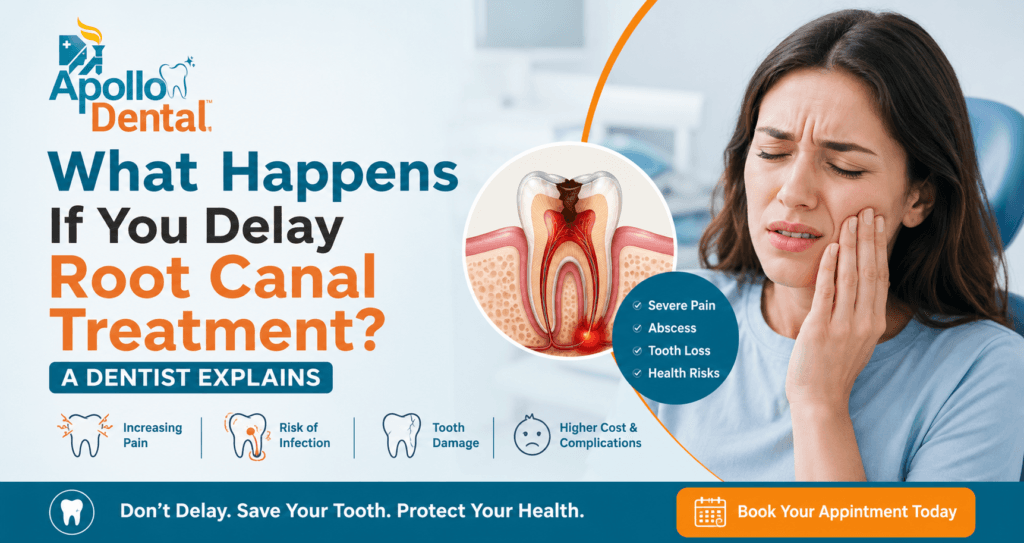
A toothache is easy to ignore when it comes and goes. Many people take painkillers, avoid chewing on one side, or postpone a dental appointment because they are busy or nervous. However, when your dentist recommends a root canal treatment (RCT), delaying it can turn a manageable dental problem into a painful emergency.
So, what happens if you delay root canal treatment? The answer depends on how advanced the infection is, but in most cases, postponing treatment allows bacteria to spread deeper into the tooth and surrounding tissues. This can lead to severe pain, swelling, bone loss, tooth fracture, or even tooth extraction.
In this guide, experienced dentists explain why timely root canal treatment matters, what risks are involved in waiting, and when you should seek immediate dental care.
What is Root Canal Treatment?
Root canal treatment is a procedure that removes infected or damaged pulp from inside a tooth. The pulp contains nerves, blood vessels, and connective tissues. When bacteria enter this area due to deep decay, cracks, trauma, or repeated dental procedures, the pulp becomes infected.
During the procedure, the dentist:
- Removes infected pulp
- Cleans and disinfects the canals
- Seals the tooth
- Restores it with a filling or crown
The goal is to save your natural tooth while eliminating infection and pain.
What Happens If You Delay Root Canal Treatment?
Delaying treatment doesn’t make the infection disappear. Instead, bacteria continue multiplying inside the tooth.
Here are the most common consequences.
1. The Infection Gets Worse
Initially, the infection stays inside the pulp. Over time, bacteria travel beyond the root tips into the surrounding bone.
This may result in:
- Severe toothache
- Persistent throbbing pain
- Swollen gums
- Bad breath
- Pus formation
- Facial swelling
Once the infection spreads, treatment often becomes more complicated.
2. Pain May Disappear—But That’s Not Good
Many patients mistakenly believe that if the pain stops, the problem has healed.
In reality, the nerve inside the tooth may have died completely.
Even though the pain reduces temporarily, bacteria continue damaging the surrounding tissues silently.
This is why dentists recommend treatment even if symptoms improve.
3. Dental Abscess Can Develop
One of the biggest risks of delaying root canal treatment is a dental abscess.
An abscess is a pocket of pus caused by bacterial infection.
Symptoms include:
- Swelling in the face
- Fever
- Difficulty swallowing
- Bad taste in the mouth
- Swollen lymph nodes
- Constant throbbing pain
An untreated abscess can become a serious medical emergency.
4. You May Lose the Tooth
As infection spreads, the supporting bone around the tooth starts breaking down.
The tooth becomes:
- Loose
- Weak
- Difficult to restore
Eventually, extraction may become the only treatment option.
Saving a natural tooth is almost always better than replacing it with a bridge or dental implant.
5. Treatment Becomes More Expensive
Early root canal treatment is generally less complicated.
When delayed, additional procedures may be required, including:
- Drainage of infection
- Bone treatment
- Surgical root canal (Apicoectomy)
- Tooth extraction
- Dental implant
- Bone grafting
Ignoring the problem today often leads to significantly higher treatment costs later.
Is It Okay to Delay a Root Canal?
This is one of the most searched dental questions online.
The simple answer is:
No, delaying a root canal is generally not recommended.
If your dentist has confirmed that the pulp is infected or irreversibly damaged, the tooth cannot heal naturally.
Painkillers and antibiotics may temporarily reduce symptoms, but they do not remove the infected tissue inside the tooth.
The infection usually returns once medication stops.
Can I Wait 3 Months for a Root Canal?
Many patients ask:
Can I wait 3 months for a root canal?
The answer depends on your diagnosis.
If the infection has already reached the pulp, waiting several months increases the risk of:
- Tooth fracture
- Larger infection
- Bone damage
- Dental abscess
- Tooth loss
Some teeth may remain stable for a short period, while others can worsen within days or weeks.
Only your dentist can determine how urgent your case is, but postponing treatment for months is rarely advisable.
Warning Signs You Should Never Ignore
Contact your dentist immediately if you notice:
- Severe tooth pain
- Pain while biting
- Swollen gums
- Facial swelling
- Tooth discoloration
- Pus near the tooth
- Sensitivity lasting several minutes
- Fever with dental pain
These symptoms often indicate active infection requiring prompt treatment.
Can a Dentist Miss a Root During a Root Canal?
Another common concern is:
Can a dentist miss a root during a root canal?
Yes—but it is uncommon when treatment is performed using modern techniques.
Some teeth naturally have extra canals that are difficult to detect.
For example:
- Upper molars often have hidden canals.
- Lower premolars may have unusual anatomy.
Experienced dentists use:
- Digital X-rays
- Magnification
- Rotary instruments
- Advanced imaging when needed
These technologies significantly improve the chances of locating and treating every canal successfully.
If a canal is missed, bacteria may remain inside the tooth, leading to persistent infection and the possible need for retreatment.
Choosing an experienced dental team greatly reduces this risk.
Can Antibiotics Replace Root Canal Treatment?
No.
Antibiotics cannot clean the infected pulp inside the tooth.
They may temporarily reduce swelling but cannot eliminate bacteria trapped within the root canals.
The infection usually returns unless the source is removed through proper dental treatment.
How Soon Should You Schedule Root Canal Treatment?
Ideally, treatment should begin as soon as your dentist recommends it.
Prompt care offers several benefits:
- Better chance of saving the tooth
- Faster pain relief
- Lower treatment costs
- Reduced infection risk
- Simpler procedure
- Improved long-term success
Early intervention is almost always easier than treating advanced infection.
Tips to Prevent Root Canal Problems
Good oral hygiene can reduce your chances of needing root canal treatment.
Follow these habits:
- Brush twice daily with fluoride toothpaste.
- Floss every day.
- Avoid excessive sugary foods and drinks.
- Wear a mouthguard during sports.
- Visit your dentist every six months.
- Treat cavities early before they reach the tooth’s pulp.
- Don’t ignore persistent tooth sensitivity or pain.
Preventive dental care is far easier than treating advanced decay.
FAQs:
Does every painful tooth need a root canal?
No. Tooth pain can result from cavities, gum disease, cracked teeth, or sensitivity. Your dentist will determine whether the pulp is infected and whether root canal treatment is necessary.
Can a root canal be done without pain?
Yes. Modern root canal treatment is performed using local anesthesia, making the procedure comfortable for most patients.
How long does a root canal take?
Most treatments are completed in one or two appointments, depending on the complexity of the tooth and the severity of the infection.
Will my tooth become weak after a root canal?
A root canal-treated tooth can become more brittle over time, which is why dentists often recommend placing a dental crown to restore strength and protect it from fractures.
Is extracting the tooth better than getting a root canal?
Whenever possible, saving your natural tooth is the preferred option. Root canal treatment helps preserve normal chewing function, jawbone health, and your natural smile.
Conclusion
If you’ve been wondering what happens if you delay root canal treatment, the answer is clear: postponing care can allow a minor infection to become a serious dental problem. What begins as occasional discomfort may progress to severe pain, swelling, bone damage, or even tooth loss.
If your dentist has advised root canal treatment, don’t wait for the symptoms to worsen. Early treatment is more comfortable, more predictable, and often less expensive than dealing with advanced infection later.
At Apollo Dental Clinic, our experienced dentists use modern diagnostic tools and advanced techniques to provide comfortable, effective root canal treatment while helping patients preserve their natural teeth. If you’re experiencing persistent tooth pain or have been advised to undergo a root canal, schedule your consultation promptly to protect your oral health and avoid unnecessary complications.
Read More: