A tooth extraction may take only a short time in the dental chair, but what happens afterward often raises more questions. When can you return to work? How long will the soreness last? Can you eat normally within a few days? And when should you worry about delayed healing?
If you are planning a tooth removal in Kolkata, understanding the recovery process can help you prepare without unnecessary anxiety. Recovery after tooth extraction depends on the tooth’s position, the complexity of the procedure, your general health, and how carefully you follow your dentist’s instructions.
At Apollo Dental Clinic, patients can receive personalised guidance on healing, pain management, and the right time to resume everyday activities.
How Long Does Recovery After Tooth Extraction Take?
For a straightforward extraction, many people feel noticeably better within two to three days. The gum continues healing over the following weeks, while the underlying bone takes considerably longer to fill and remodel.
Surgical extractions, including some impacted wisdom teeth, may require additional recovery time. Swelling and jaw stiffness can be more noticeable during the first few days.
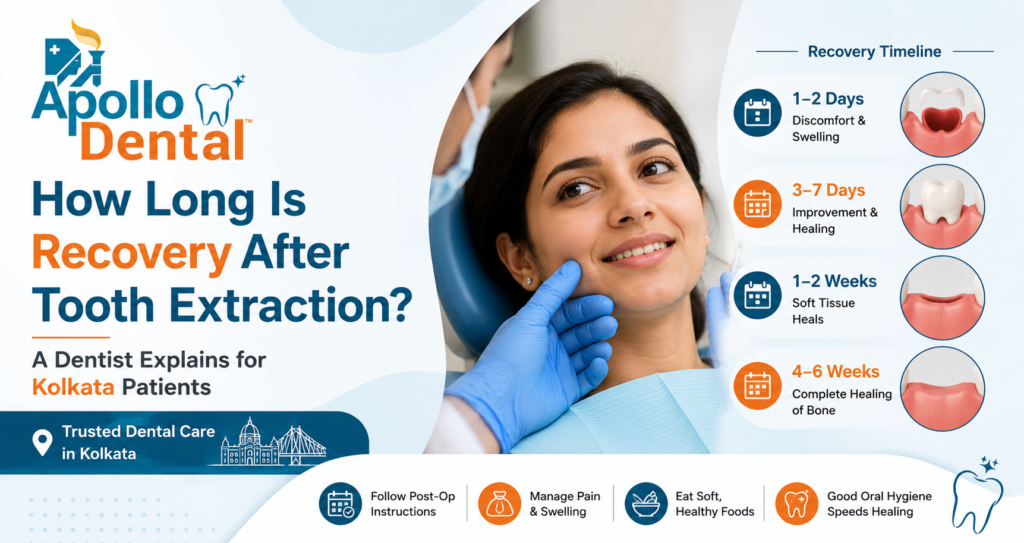
Here is a general guide to what you might experience:
- First 24 hours: A blood clot forms in the socket. Mild bleeding, tenderness, and discomfort may occur.
- Days 2–3: Swelling and soreness can become more noticeable before gradually improving.
- Days 4–7: Many patients experience less discomfort and can return to most ordinary activities, depending on the procedure.
- Weeks 1–2: The gum tissue continues closing over the extraction area.
- Following weeks and months: Deeper tissues and bone continue repairing themselves.
These are typical patterns, not guaranteed deadlines. Your dentist’s instructions should take priority because every extraction is different.
How Many Days Should You Rest After Tooth Removal?
The amount of rest you need depends on the difficulty of the extraction and the demands of your daily routine.
After a simple extraction, taking the remainder of the day off is often sensible. Some patients return to desk-based work the next day if they feel comfortable. If your job involves heavy lifting, strenuous exercise, or prolonged physical activity, you may need additional time away from those duties.
Surgical removal of an impacted wisdom tooth can require a longer break, particularly when swelling or restricted mouth opening affects eating and speaking.
Avoid strenuous exercise during the initial recovery period, especially during the first 24–48 hours or for the period advised by your dentist. Increased physical effort may restart bleeding or aggravate discomfort.
Rather than following a fixed number of rest days, pay attention to your symptoms and the procedure you underwent.
What Is the 3-3-3 Rule for Tooth Extraction?
The phrase “3-3-3 rule for tooth extraction” appears in online dental discussions, but it is not a universally accepted clinical guideline. Different sources may use it to describe different routines, so patients should not treat it as an official recovery protocol.
Some people associate similar three-day rules with rest, symptom monitoring, or gradually returning to normal activities. However, there is no single three-part formula that safely replaces instructions from your treating dentist.
A more dependable approach is to protect the blood clot, follow the prescribed medication schedule, and monitor whether your symptoms are improving.
If someone recommends a strict 3-3-3 routine, ask what each number means and whether it applies to your particular extraction. Evidence-based aftercare is more useful than a memorable rule without a clear clinical definition.
Can a Tooth Extraction Heal in 7 Days?
Yes, the initial healing of an uncomplicated extraction may be well advanced within seven days. Many patients have less pain, reduced swelling, and improved comfort when eating by this stage.
However, seven days does not mean the extraction site is completely healed. The gum may still be repairing itself, and the socket beneath it can remain open while deeper tissues recover.
Wisdom tooth surgery, infection, smoking, certain medical conditions, and other individual factors may slow healing.
If discomfort steadily decreases, that is generally reassuring. If pain becomes severe or increases after initially improving, contact your dentist rather than assuming that recovery simply takes longer.
What Helps an Extraction Site Heal Properly?
The first day is especially important because the blood clot protects the exposed socket and supports healing.
Follow these practical steps:
Keep the clot protected. Avoid vigorous rinsing, forceful spitting, and drinking through a straw during the initial 24 hours, unless your dentist advises otherwise.
Choose suitable foods. Soft, cool or lukewarm foods are usually easier to manage initially. Consider yoghurt, mashed vegetables, scrambled eggs, or soft rice once comfortable. Avoid very hot foods while the area is bleeding or numb.
Clean your mouth carefully. Continue brushing your other teeth gently, taking care not to disturb the socket. After the first 24 hours, gentle warm saltwater rinses may be recommended. Do not rinse forcefully.
Avoid smoking and tobacco. Smoking can interfere with healing and increase the risk of complications, including dry socket. Avoid it during recovery, following your dentist’s guidance.
Take medicines correctly. Use prescribed medicines according to instructions. Do not place aspirin, crushed tablets, or household remedies directly into the extraction wound.
These small decisions can make recovery more comfortable and reduce the risk of avoidable problems.
What Pain and Swelling Are Normal After Tooth Removal?
Some tenderness, mild bleeding, bruising, and swelling can occur after an extraction. Swelling may increase during the first 48–72 hours, particularly after surgical removal, before gradually settling.
The important factor is the overall direction of your symptoms. Discomfort should generally begin improving rather than becoming progressively worse.
Contact your dentist promptly if you experience severe or increasing pain, persistent bleeding that does not respond to the recommended pressure technique, fever, pus, or worsening swelling.
Difficulty breathing or swallowing, or rapidly spreading swelling around the mouth or neck, requires emergency medical attention.
What Is Dry Socket, and When Should You Be Concerned?
Dry socket occurs when the protective blood clot is lost or breaks down prematurely, exposing the underlying bone and nerves. It commonly causes significant pain that begins or worsens a few days after extraction and may spread toward the ear or temple.
An unpleasant taste or bad breath may accompany the pain. These symptoms need dental assessment because dry socket can resemble other post-extraction problems.
Do not attempt to clean the socket deeply or apply medication yourself. A dentist can examine the site and provide appropriate treatment to relieve symptoms.
When Should You Contact Apollo Dental Clinic?
Arrange a dental review if recovery is not progressing as expected, pain is getting worse, or you notice signs of infection. Patients with complex extractions or particular medical conditions may also need more specific follow-up advice.
At Apollo Dental Clinic, Kolkata patients can seek professional guidance about tooth removal, aftercare, and recovery concerns.
FAQs:
When can I eat normally after tooth extraction?
Start with soft foods and gradually return to your usual diet as comfort improves. Avoid chewing directly over the socket and follow your dentist’s advice.
Can I go to work the next day?
Many people can return after a straightforward extraction if they feel well. Surgical procedures or physically demanding jobs may require more rest.
When does the extraction hole close?
The gum gradually covers the socket over the following weeks, but deeper bone healing takes longer. Closure varies with the tooth and procedure.
Conclusion
Recovery after tooth extraction is a gradual process, not a race to feel normal within a fixed number of days. Many patients improve substantially during the first week, but complete healing takes longer.
Protecting the blood clot, eating carefully, maintaining gentle oral hygiene, and recognising warning signs can support a smoother recovery. If you are preparing for tooth removal or experiencing unexpected symptoms, consult Apollo Dental Clinic for advice suited to your dental needs.
Read More: