Missing a tooth can affect much more than your smile. It can change the way you chew, speak, and even impact your confidence. Fortunately, modern dentistry offers effective solutions to restore both function and appearance. Two of the most common options are a single tooth implant and a dental bridge. But when it comes to single tooth implant vs bridge, which option is truly better?
At Apollo Clinic VIP Road, experienced dental professionals help patients choose the right tooth replacement treatment based on their oral health, lifestyle, and long-term goals. Understanding the differences between these two treatments can help you make an informed decision.
What Is a Single Tooth Implant?
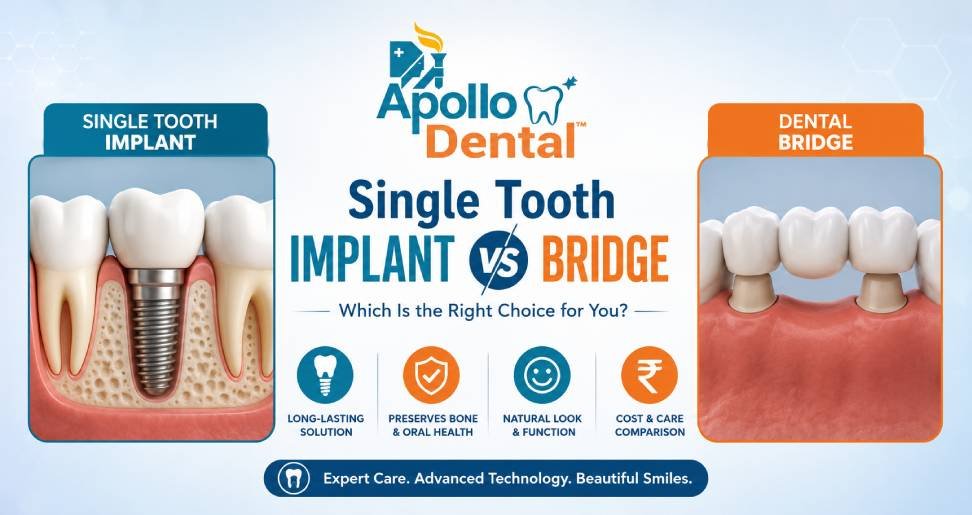
A single tooth implant is a permanent tooth replacement option that consists of three parts:
- A titanium implant placed into the jawbone
- An abutment that connects the implant to the crown
- A custom-made dental crown that looks like a natural tooth
The implant functions like a natural tooth root, providing stability and preventing bone loss in the jaw.
What Is a Dental Bridge?
A dental bridge is a prosthetic tooth held in place by the teeth on either side of the missing gap. These supporting teeth are reshaped and fitted with crowns, while the artificial tooth fills the empty space.
Dental bridges are commonly recommended for patients who want a quicker treatment process or may not be suitable candidates for implants.
Single Tooth Implant vs Bridge: Understanding the Difference
When comparing single tooth implant vs bridge, it’s important to evaluate several factors including durability, appearance, comfort, maintenance, and cost.
1. Durability and Longevity
Dental implants are known for their long-lasting results. With proper care, implants can last for decades or even a lifetime. Bridges typically last between 10–15 years before replacement may be needed.
Dental Implant vs Bridge Lifespan
Average expected lifespan of common tooth replacement options with proper care.0 years7 years14 years21 years28 yearsSingle Tooth ImplantDental Bridge
Because implants integrate with the jawbone, they offer better long-term stability compared to bridges.
2. Effect on Adjacent Teeth
One major advantage of implants is that they do not affect neighboring teeth. The implant stands independently.
In contrast, a dental bridge requires healthy adjacent teeth to be filed down to support the bridge. This can weaken otherwise healthy teeth over time.
3. Jawbone Preservation
A missing tooth can lead to bone loss in the jaw because the bone no longer receives stimulation from a tooth root. Dental implants help maintain bone density by mimicking the natural root.
Bridges do not prevent bone loss because they sit above the gumline without stimulating the jawbone.
4. Appearance and Comfort
Both implants and bridges can provide aesthetically pleasing results. However, implants often feel more natural because they are anchored directly into the bone.
Patients at Apollo Clinic VIP Road often prefer implants for their natural appearance and comfortable fit.
Single Tooth Implant vs Bridge Pros and Cons
Understanding the single tooth implant vs bridge pros and cons can help you decide which treatment aligns with your needs.
Pros of Single Tooth Implants
- Long-lasting and durable
- Preserves jawbone health
- Looks and feels natural
- Does not affect neighboring teeth
- Easier to maintain like natural teeth
Cons of Single Tooth Implants
- Higher upfront cost
- Requires minor surgical procedure
- Longer treatment timeline due to healing
Pros of Dental Bridges
- Faster treatment process
- Usually lower initial cost
- Non-surgical option
- Effective for restoring chewing ability
Cons of Dental Bridges
- May damage healthy adjacent teeth
- Does not prevent bone loss
- Shorter lifespan compared to implants
- Requires replacement after several years
What Is More Painful: A Bridge or Implant?
One of the most common patient concerns is: what is more painful a bridge or implant?
Many people assume dental implants are extremely painful because surgery is involved. However, most patients report minimal discomfort during the implant procedure because local anesthesia is used. Mild soreness after surgery is manageable with medication and usually subsides within a few days.
A dental bridge procedure is less invasive, but reshaping healthy teeth can cause temporary sensitivity and discomfort.
In reality, pain tolerance varies from person to person. Most patients find both procedures manageable when performed by experienced dental specialists like those at Apollo Clinic VIP Road.
Which Option Is More Cost-Effective?
Initially, dental bridges are generally more affordable than implants. However, implants may be more cost-effective in the long run because they last longer and require fewer replacements.
Bridges may involve future costs for repairs or replacement. When considering long-term oral health and durability, implants are often viewed as a valuable investment.
Who Is a Good Candidate for Dental Implants?
You may be a suitable candidate for a dental implant if you:
- Have healthy gums
- Have sufficient jawbone density
- Do not smoke heavily
- Maintain good oral hygiene
- Are generally in good health
If bone loss has already occurred, additional treatments like bone grafting may be needed before implant placement.
Who Should Choose a Dental Bridge?
A dental bridge may be a better option if you:
- Want a quicker solution
- Prefer a non-surgical treatment
- Have insufficient jawbone for implants
- Are looking for a lower initial cost option
A dentist can evaluate your oral condition and recommend the best approach for your situation.
Recovery Time Comparison
The recovery period for implants is longer because the implant must fuse with the jawbone in a process called osseointegration. This can take several months.
Dental bridges typically require only a few appointments and minimal healing time.
Patients who prioritize long-term benefits often choose implants despite the longer treatment duration.
Oral Hygiene and Maintenance
Dental implants can be brushed and flossed like natural teeth. Proper oral hygiene and routine dental checkups help ensure long-term success.
Bridges require extra care underneath the artificial tooth to prevent plaque buildup and gum disease.
At Apollo Clinic VIP Road, patients receive personalized guidance on maintaining both implants and bridges for lasting oral health.
Final Thoughts
When comparing single tooth implant vs bridge, there is no one-size-fits-all answer. Both treatments can successfully restore your smile and improve oral function. However, dental implants offer superior durability, bone preservation, and long-term benefits, while bridges provide a faster and more affordable solution.
The right choice depends on your oral health, budget, lifestyle, and treatment goals. Consulting an experienced dental professional is the best way to determine the most suitable option for your needs.
If you are considering tooth replacement treatment, the dental experts at Apollo Clinic VIP Road can help you explore advanced solutions tailored to your smile restoration journey.
Have A look :-