
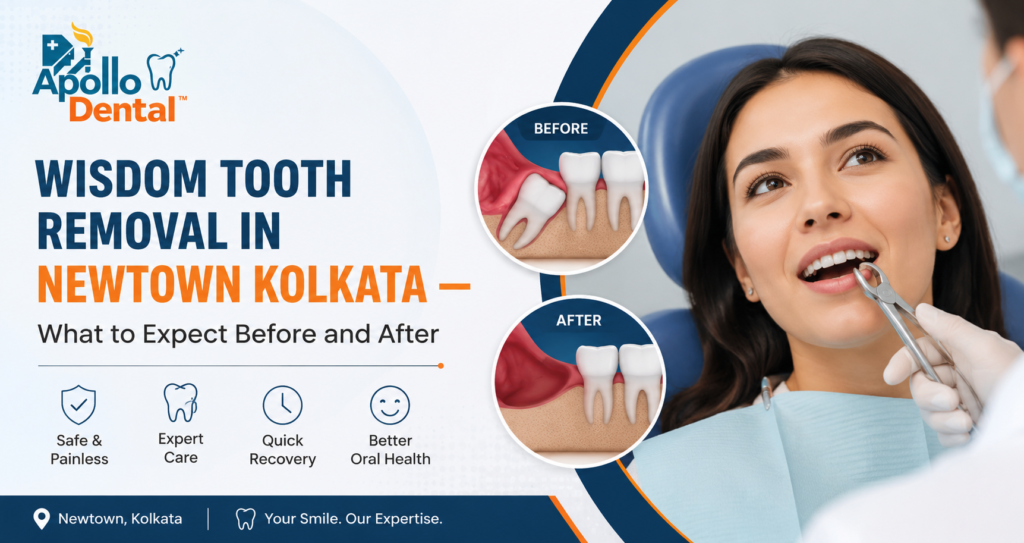
Wisdom tooth pain can make everyday activities such as eating, speaking, and sleeping uncomfortable. For some people, these teeth emerge without problems. For others, limited jaw space, gum inflammation, or an impacted tooth can lead to persistent discomfort. Understanding the procedure can help you make an informed decision about treatment.
If you are considering wisdom tooth removal in Newtown Kolkata, knowing how to prepare, what happens during surgery, and how to recover can make the experience less stressful. At Apollo Dental Clinic, patients can seek professional dental evaluation to understand whether extraction is necessary and which treatment approach suits their condition.
What Is Wisdom Tooth Removal?
Wisdom teeth are the last molars to develop, usually appearing between the late teenage years and the mid-twenties. They are located at the back of the mouth, where limited space can prevent them from erupting correctly.
When a wisdom tooth grows sideways, remains trapped beneath the gums, or repeatedly causes infection, a dentist may recommend removal. The procedure involves extracting the affected tooth under appropriate local anaesthesia. Depending on its position, a straightforward extraction or a minor surgical procedure may be required.
Not every wisdom tooth needs extraction. A dental examination and suitable X-rays help determine whether removal is necessary.
When Should You Consider Wisdom Tooth Extraction?
Several symptoms may indicate that your wisdom teeth need professional attention. These include recurring pain at the back of your jaw, swollen or bleeding gums, difficulty opening your mouth, unpleasant breath, and discomfort while chewing.
A partially erupted tooth can also trap food and bacteria beneath the gum tissue, increasing the likelihood of inflammation or infection. In some cases, an impacted wisdom tooth may damage the neighbouring molar.
If you experience facial swelling, fever, pus, or worsening pain, arrange a prompt dental assessment. Difficulty swallowing or breathing requires emergency medical attention.
For Newtown residents experiencing recurring wisdom tooth problems, early evaluation can help identify complications before they become more difficult to manage.
What to Expect Before Wisdom Tooth Removal?
Preparation begins with a consultation. Your dentist will review your symptoms, medical history, medications, and any previous reactions to anaesthesia. An examination and dental imaging help establish the tooth’s position and its relationship with nearby structures.
Your dentist will explain the proposed procedure, expected recovery, possible risks, and available anaesthesia options. Tell them about any medical conditions, allergies, pregnancy, or medicines you take, particularly blood thinners.
Follow the clinic’s instructions about eating and drinking. Fasting requirements depend on the type of sedation or anaesthesia planned, so do not assume that every extraction requires fasting.
Arrange transport home if sedation is planned, and consider taking time off work if your procedure is complex. Preparing soft foods and keeping essential supplies ready can make the first few recovery days easier.
What Happens During Wisdom Tooth Surgery?
Most extractions begin with local anaesthesia, which numbs the treatment area. You may feel pressure or movement, but sharp pain should be addressed immediately by informing your dentist.
For an erupted tooth, the dentist may loosen it carefully before removing it. An impacted tooth may require a small gum incision and, occasionally, removal of a little surrounding bone. The tooth may be divided into smaller sections to facilitate extraction.
Stitches may be placed when necessary, and gauze is used to control bleeding. The dentist will provide aftercare instructions before you leave.
How Long Is Surgery for Three Wisdom Teeth?
The duration depends on tooth position, root shape, impaction, and surgical complexity. Removing three wisdom teeth may take approximately 30 minutes to two hours, although some cases take longer. This estimate refers to the procedure itself, not the entire appointment.
Your dentist can provide a more realistic estimate after examining your X-rays. Recovery also varies, even when several teeth are removed during one visit.
Is Wisdom Tooth Removal Risky?
Wisdom tooth removal is a commonly performed dental procedure, but it is not completely risk-free. Temporary swelling, discomfort, bruising, and minor bleeding are common during recovery.
Less common complications include dry socket, infection, prolonged bleeding, and injury to nearby nerves. Lower wisdom teeth can sometimes lie close to nerves responsible for sensation in the lip, chin, or tongue. Your dentist assesses these relationships before recommending surgery.
Choosing an appropriately trained dental professional, sharing accurate medical information, and following postoperative instructions can help reduce avoidable complications. Ask questions about your individual risk rather than relying on general online estimates.
What’s the Worst Tooth to Get Pulled?
There is no single tooth that is always the worst to extract. Deeply impacted lower wisdom teeth can be more challenging because of their position, root shape, and proximity to important nerves.
However, some wisdom teeth are straightforward to remove, while other teeth may present greater difficulties because of infection, damaged roots, or surrounding bone conditions. Complexity depends on the individual case, not simply the tooth’s name.
Dental imaging and clinical assessment help your dentist plan a suitable approach and discuss whether referral to an oral surgeon is appropriate.
Wisdom Tooth Removal Aftercare: Your Recovery Guide
The first 24 hours are important for protecting the blood clot that forms in the extraction socket.
During the first day: Bite gently on the gauze as instructed, rest, and apply a cold pack externally in short intervals. Choose cool or lukewarm soft foods, such as yoghurt, mashed potatoes, or smooth porridge. Avoid vigorous rinsing, spitting, smoking, alcohol, and drinking through a straw.
From the second day onward: Begin gentle warm salt-water rinses when advised, particularly after meals. Brush carefully around the area without disturbing the socket. Gradually return to normal foods as comfort improves.
Take prescribed medicines according to your dentist’s instructions. Do not place aspirin directly on the gums or independently change prescribed medication.
Contact your dentist if pain worsens after initially improving, bleeding persists, swelling increases significantly, or you develop fever or discharge.
How Long Does Recovery Take?
Many patients notice the greatest swelling during the first two or three days, followed by gradual improvement. Mild discomfort may continue for several days, while complete healing of the extraction socket takes considerably longer.
Simple extractions often allow a quicker return to everyday activities than surgical removal of impacted teeth. Your recovery depends on the procedure’s complexity, your general health, and how closely you follow aftercare guidance.
Attend any recommended follow-up appointment, especially if stitches need checking or symptoms are not improving as expected.
Where to Get Wisdom Tooth Removal in Newtown Kolkata
Choosing dental care starts with understanding your symptoms and receiving an individual assessment. At Apollo Dental Clinic, discuss your concerns, review the recommended treatment plan, and ask about expected costs, recovery time, and follow-up care before proceeding.
If you have persistent wisdom tooth pain, swollen gums, or difficulty chewing, arrange a dental consultation rather than waiting for symptoms to worsen. Timely evaluation can help you understand your options and plan treatment confidently.
FAQs:
Can wisdom tooth removal be done in one day?
Many extractions are completed during one appointment. The timing depends on the tooth’s position, the number of teeth involved, and your clinical needs.
Will I feel pain during wisdom tooth removal?
Local anaesthesia is used to numb the area. Pressure may be noticeable, but sharp pain should be reported immediately so your dentist can assess it.
When can I eat normally after extraction?
Start with soft foods and gradually reintroduce firmer foods as healing progresses. Avoid chewing directly over the extraction site until comfortable.
Is removing an impacted wisdom tooth more difficult?
It can be more complex because the tooth may be covered by gum tissue or bone. Dental imaging helps determine the appropriate surgical approach.
Book a dental consultation in Newtown, Kolkata, to discuss wisdom tooth pain, understand your treatment options, and receive personalised advice for a comfortable recovery.
Read More: