
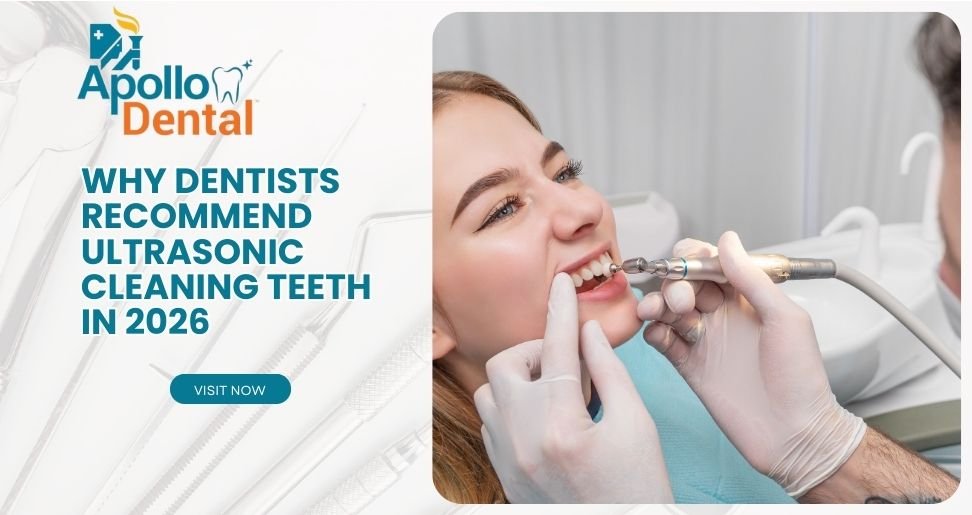
Maintaining excellent oral hygiene has never been more essential, and with modern dental technology, procedures have become more efficient, painless, and effective. One such advanced method is ultrasonic cleaning teeth, which is increasingly recommended by dentists worldwide, including at Apollo Dental Ultadanga.
In this article, we’ll explore what ultrasonic teeth cleaning is, its benefits, potential drawbacks, and why dental experts prefer it over traditional methods.
What Is Ultrasonic Cleaning Teeth?
Ultrasonic teeth cleaning, also known as ultrasonic scaling, is a dental procedure that uses high-frequency sound waves to remove plaque, tartar, and stains from teeth. Unlike traditional scraping methods, ultrasonic devices vibrate at a rapid pace to break down deposits on teeth while simultaneously spraying a cooling mist of water.
This technology not only ensures thorough cleaning but also reduces discomfort, treatment time, and potential damage to enamel.
Is Ultrasonic Cleaning Good for Teeth?
Yes, ultrasonic cleaning is good for teeth when performed by a trained dental professional. It effectively removes stubborn plaque and tartar from areas that are hard to reach with regular brushing or manual scaling. The benefits include:
- Comprehensive cleaning – reaches deep below the gumline.
- Prevention of gum disease – reduces risks of gingivitis and periodontitis.
- Stain removal – helps maintain brighter, healthier teeth.
- Reduced treatment time – quicker than manual scaling.
Dentists recommend this procedure as part of a routine dental care regimen to maintain optimal oral health.
How Ultrasonic Teeth Cleaning Works
Ultrasonic cleaning devices use a small tip that vibrates at ultrasonic frequencies. These vibrations, combined with a water spray, help dislodge tartar and debris from teeth. The procedure is safe, efficient, and usually completed within 30–60 minutes depending on the patient’s oral condition.
Key steps include:
- Examination: The dentist assesses your teeth and gums.
- Ultrasonic scaling: The device removes plaque and tartar.
- Polishing: Teeth are polished to remove stains and smooth surfaces.
- Fluoride treatment: Optional step for additional protection.
Ultrasonic Teeth Cleaning vs Scaling
Many patients wonder about the difference between ultrasonic cleaning and traditional scaling. Here’s a quick comparison:
| Feature | Ultrasonic Cleaning | Traditional Scaling |
|---|---|---|
| Method | High-frequency vibrations + water | Manual scraping |
| Time | 30–60 minutes | Often longer |
| Comfort | Less discomfort, minimal pain | Can be uncomfortable |
| Effectiveness | Removes deep-seated tartar & plaque | Effective but may miss hard-to-reach areas |
| Enamel Safety | Gentle on enamel | Can sometimes cause minor scratches |
While both methods are effective, ultrasonic cleaning is often preferred due to its speed, efficiency, and patient comfort.
Is Ultrasonic Teeth Cleaning Painful?
Many patients ask, “Is ultrasonic teeth cleaning painful?” The good news is that most people experience minimal discomfort during the procedure.
- Mild sensitivity may occur, especially if gums are inflamed.
- The water spray helps cool the tooth surface, reducing pain.
- Dentists may use a local anesthetic for patients with sensitive teeth.
Overall, ultrasonic cleaning is far less painful compared to traditional manual scraping.
Is Ultrasonic Scaling Safe for Teeth?
Absolutely. Ultrasonic scaling is safe for teeth when performed correctly by a professional. Modern ultrasonic devices are designed to be gentle on enamel while efficiently removing plaque and tartar.
- Safe for most adults and children with healthy gums.
- Should be performed regularly, but excessive cleaning may irritate gums.
- Patients with severe gum disease or sensitive teeth should consult their dentist for tailored care.
What Are the Disadvantages of Ultrasonic Teeth Cleaning?
While ultrasonic cleaning is highly beneficial, it comes with a few potential drawbacks:
- Sensitivity: Some patients experience temporary sensitivity post-treatment.
- Gum Irritation: Overuse or aggressive cleaning may cause minor gum irritation.
- Not Suitable for Everyone: People with certain medical conditions, such as pacemakers or severe gum disease, should seek alternative treatments.
- Cost: Typically slightly more expensive than traditional scaling.
Despite these disadvantages, the benefits of ultrasonic cleaning often outweigh the drawbacks for most patients.
How Often Should You Get Ultrasonic Cleaning?
For optimal oral health, dentists recommend ultrasonic cleaning every 6 months, similar to routine dental checkups. Patients with a history of gum disease or heavy tartar buildup may need more frequent sessions.
People Also Ask
1. Is Ultrasonic Cleaning Good for Teeth?
Yes, it efficiently removes plaque, tartar, and stains while reducing gum disease risk. It’s highly recommended for maintaining oral hygiene.
2. Is Ultrasonic Teeth Cleaning Painful?
Most patients experience little to no pain. Mild sensitivity may occur, but it’s generally less uncomfortable than traditional scraping.
3. Is Ultrasonic Scaling Safe for Teeth?
Yes, when performed by a professional, ultrasonic scaling is safe and gentle on teeth and gums.
4. What Are the Disadvantages of Ultrasonic Teeth Cleaning?
Temporary sensitivity, minor gum irritation, and slightly higher cost are the main disadvantages.
5. Ultrasonic Teeth Cleaning vs Scaling – Which is Better?
Ultrasonic cleaning is faster, less painful, and more effective for hard-to-reach areas, while manual scaling is effective but may take longer and cause more discomfort.
Tips to Maximize the Benefits of Ultrasonic Cleaning
- Brush and floss regularly.
- Avoid excessive sugary foods and drinks.
- Schedule routine dental checkups every 6 months.
- Inform your dentist of any sensitivity or medical conditions before the procedure.
Why Choose Apollo Dental Ultadanga for Ultrasonic Teeth Cleaning
At Apollo Dental Ultadanga, we combine advanced ultrasonic technology with experienced dental professionals to ensure safe, efficient, and comfortable teeth cleaning. Our clinic focuses on:
- Modern ultrasonic devices for precise cleaning
- Personalized care for sensitive teeth
- Comprehensive oral hygiene guidance
- Comfortable and hygienic environment
With our expertise, patients leave with brighter, healthier smiles and a lower risk of dental problems.
Conclusion
Ultrasonic teeth cleaning is a modern, efficient, and safe method for maintaining oral health. It offers numerous benefits, including thorough plaque removal, reduced treatment time, and minimal discomfort. While there are minor disadvantages, proper care and professional supervision make it an excellent choice for routine dental hygiene.
Whether you’re considering your first ultrasonic cleaning or looking to switch from traditional scaling, Apollo Dental Ultadanga provides expert care and cutting-edge technology to keep your teeth healthy and bright.
Read More: