
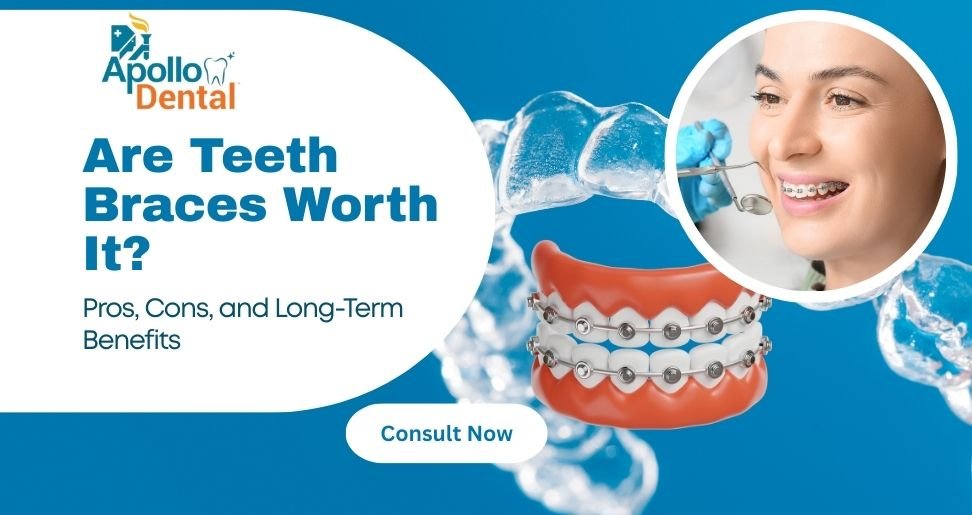
A confident smile is often the first thing people notice about you. But if you have crooked, crowded, or misaligned teeth, you might find yourself wondering: Are teeth braces worth it?
Braces have helped millions of people achieve straighter teeth and healthier smiles. However, like any dental treatment, they come with both benefits and drawbacks. If you’re considering braces for yourself or your child, it’s important to understand the pros, cons, long-term effects, and potential disadvantages of teeth braces before making a decision.
In this comprehensive guide by Apollo Dental, we’ll explore everything you need to know — from short-term discomfort to long-term benefits — so you can confidently decide if braces are the right investment for your smile.
What Are Teeth Braces?
Teeth braces are orthodontic devices designed to correct misaligned teeth and jaw issues. They apply consistent pressure over time to gradually move teeth into proper alignment.
Braces are commonly used to treat:
- Crooked teeth
- Overbite or underbite
- Crossbite
- Gaps between teeth
- Crowded teeth
- Jaw alignment problems
Modern orthodontics offers various types of braces, including:
- Traditional metal braces
- Ceramic braces
- Lingual braces
- Clear aligners
Each option has unique advantages depending on your dental condition and lifestyle preferences.
Why Do People Get Teeth Braces?
While aesthetics are a major reason, braces are not just about appearance. Misaligned teeth can lead to:
- Difficulty chewing
- Speech problems
- Increased risk of cavities
- Gum disease
- Jaw pain and TMJ issues
- Uneven tooth wear
Correcting alignment improves not just how your smile looks — but how it functions.
Pros of Teeth Braces
Let’s explore the biggest advantages of getting braces.
1. Improved Smile and Confidence
A straight smile can significantly enhance your self-esteem. Many patients report feeling more confident in social and professional situations after orthodontic treatment.
When teeth are properly aligned, people often smile more freely — which positively impacts mental well-being.
2. Better Oral Health
Crooked or crowded teeth create tight spaces where plaque and bacteria accumulate. This increases the risk of:
- Tooth decay
- Gum disease
- Bad breath
Braces make teeth easier to clean once alignment is corrected, leading to improved long-term oral hygiene.
3. Corrected Bite Problems
Misaligned bites can cause serious dental problems over time. Braces correct:
- Overbites
- Underbites
- Crossbites
- Open bites
Fixing these issues reduces stress on jaw muscles and prevents abnormal tooth wear.
4. Prevention of Future Dental Issues
Untreated alignment issues can lead to:
- Chipped teeth
- Tooth erosion
- Jaw pain
- Headaches
Braces help prevent costly restorative treatments later in life.
5. Long-Term Investment
One of the most searched questions is: Are braces worth it long term?
For most patients, the answer is yes. The benefits often last a lifetime — especially when retainers are used properly after treatment.
Braces are not just cosmetic — they’re preventive and functional.
Disadvantages of Teeth Braces
No treatment is perfect. Here are some potential downsides to consider.
1. Initial Discomfort
It’s normal to experience soreness after getting braces or after adjustments. The pressure applied to teeth can cause:
- Mild pain
- Jaw discomfort
- Sensitivity while chewing
The good news? This discomfort usually fades within a few days.
2. Oral Hygiene Challenges
Braces make brushing and flossing more difficult. Food particles can easily get trapped around brackets and wires.
Without proper care, patients risk:
- White spots on teeth
- Cavities
- Gum inflammation
Good oral hygiene becomes even more important during treatment.
3. Dietary Restrictions
You may need to avoid:
- Hard foods (nuts, popcorn)
- Sticky foods (caramel, chewing gum)
- Crunchy snacks
These foods can damage brackets and prolong treatment.
4. Time Commitment
Orthodontic treatment typically lasts between 12–24 months. Regular dental visits are required for adjustments.
If you’re looking for instant results, braces require patience.
5. Cost Considerations
Braces can be a financial investment. However, many clinics offer flexible payment plans.
When comparing cost, remember: untreated dental problems can become more expensive over time.
Do Braces Have Long-Term Effects?
This is another frequently asked question.
In most cases, braces have positive long-term effects — not negative ones.
Long-Term Benefits Include:
- Permanent improvement in alignment
- Reduced risk of tooth decay
- Better jaw function
- More balanced facial structure
- Improved speech clarity
However, results depend heavily on wearing retainers after treatment. Teeth naturally tend to shift back over time if retainers are not used.
Permanent Side Effects of Braces: Are They Common?
Many people worry about permanent damage. Let’s clarify.
Permanent side effects of braces are rare — especially when treatment is done by a qualified orthodontist and patients follow care instructions.
Possible risks include:
1. Minor Root Resorption
In some cases, tooth roots may shorten slightly. This usually does not affect tooth health.
2. Enamel Decalcification
White spots may appear if oral hygiene is poor during treatment. This is preventable with proper care.
3. Slight Relapse
Teeth can shift if retainers are not worn consistently.
Overall, severe permanent side effects are uncommon. With proper supervision and hygiene, braces are considered safe.
Are Braces Worth It Long Term?
Let’s break this down clearly.
Financially
Braces may seem costly initially, but they can prevent expensive dental procedures later.
Emotionally
Improved confidence and smile satisfaction can positively impact your life for decades.
Medically
Straight teeth are easier to maintain and less likely to develop complications.
For most patients, braces are absolutely worth it long term.
Who Should Consider Teeth Braces?
Braces are suitable for:
- Children with developing bite issues
- Teenagers with crowded teeth
- Adults seeking cosmetic improvements
- Patients experiencing jaw discomfort
There is no upper age limit. Adult orthodontics is more common than ever.
What Happens If You Don’t Get Braces?
Ignoring alignment problems may lead to:
- Progressive tooth wear
- Increased dental treatment costs
- Chronic jaw pain
- Gum disease
- Tooth loss in severe cases
Mild misalignment may not require treatment, but moderate to severe cases often benefit greatly from braces.
Modern Alternatives to Traditional Braces
Today, patients have more options than ever.
Clear Aligners
Nearly invisible and removable.
Ceramic Braces
Less noticeable than metal braces.
Lingual Braces
Placed behind teeth for hidden treatment.
Each option has advantages depending on your dental needs.
Life After Braces: What to Expect
After braces are removed:
- You’ll receive retainers
- Teeth may feel slightly sensitive
- Your smile will appear straighter immediately
Retainers are critical. They maintain your results and prevent shifting.
Consistency equals permanence.
FAQs:
Are braces painful?
They may cause temporary discomfort after adjustments, but pain is manageable and short-lived.
How long do braces take?
Typically 12–24 months depending on severity.
Can adults get braces?
Absolutely. Many adults successfully undergo orthodontic treatment.
Do braces damage teeth?
No — when maintained properly. Poor hygiene during treatment can cause issues, not the braces themselves.
Are braces worth it for minor misalignment?
It depends on personal goals. Even small corrections can significantly improve aesthetics and function.
The Psychological Impact of a Straight Smile
A confident smile can influence:
- Job interviews
- Social relationships
- Public speaking
- First impressions
Research consistently shows that people with straight teeth are often perceived as more confident and approachable.
Braces can be life-changing — not just tooth-changing.
Final Verdict: Are Teeth Braces Worth It?
If you’re asking, “Are teeth braces worth it?” — the answer depends on your individual dental needs, lifestyle, and goals.
However, for most patients:
✔ The long-term benefits outweigh the temporary discomfort.
✔ The functional improvements enhance oral health.
✔ The aesthetic transformation boosts confidence.
✔ The preventive advantages reduce future dental problems.
While there are disadvantages of teeth braces — such as cost, discomfort, and maintenance — the long-term rewards often make them a worthwhile investment.
Why Choose Professional Orthodontic Care?
Choosing the right dental team ensures:
- Accurate diagnosis
- Customized treatment plan
- Reduced risk of side effects
- Safe and effective results
Professional supervision makes all the difference in achieving a healthy, long-lasting smile.
Conclusion
Teeth braces are more than just a cosmetic treatment. They are a long-term investment in your dental health, confidence, and overall well-being.
Yes, they require patience.
Yes, they demand care and commitment.
But the results — a straighter, healthier smile — can last a lifetime.
If you’re still wondering, “Are braces worth it long term?” — consider this:
A smile is something you carry every day.
And investing in it might be one of the best decisions you ever make.
Read More :
Dental Veneers Process: From Consultation to Final Smile
Best Root Canal Treatment in Kolkata: Painless Procedure & Recovery
Oral Submucous Fibrosis Treatment in Kolkata: Complete Guide for Early and Advanced Stages