Losing a tooth can be a stressful experience, affecting both your appearance and oral health. Dental bridges are one of the most common and effective solutions to restore your smile. In this complete guide, we’ll explore bridge teeth before and after, the types of dental bridges, their benefits, lifespan, eating considerations, and possible disadvantages. By the end, you’ll have a clear understanding of whether a dental bridge is the right choice for you.
What is a Dental Bridge?
A dental bridge is a fixed prosthetic device used to replace one or more missing teeth by literally “bridging” the gap between remaining natural teeth. The teeth on either side of the gap, called abutments, support the bridge, while the artificial tooth or teeth in the middle, called pontics, fill the space.
Dental bridges not only restore your smile but also prevent your remaining teeth from shifting, maintain your bite, and improve chewing and speaking abilities.
Bridge Teeth Before and After: What to Expect
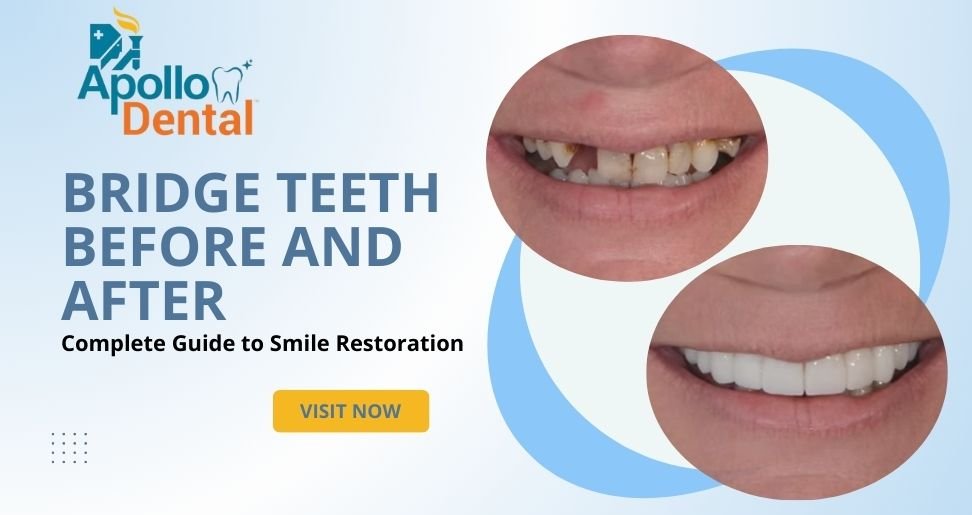
Seeing the transformation of bridge teeth before and after placement can be remarkable.
- Before: Missing teeth can cause gaps that affect your smile, chewing ability, and overall oral health. Teeth may shift toward the empty space, creating misalignment.
- After: With a dental bridge, your smile is restored to its natural appearance. Gaps are filled, your bite is more balanced, and your ability to chew and speak improves. Patients often notice an immediate boost in confidence after the procedure.
Types of Dental Bridges
When considering dental bridges, knowing the available options is essential. Here are the most common types of dental bridges:
- Traditional Bridges
Traditional bridges are the most common type and involve creating a crown for the teeth on either side of the missing tooth, with a pontic in between. They are suitable when you have natural teeth on both sides of the gap. - Cantilever Bridges
These bridges are used when there’s only one adjacent tooth next to the missing tooth. Cantilever bridges are less common but effective in specific scenarios. - Maryland Bonded Bridges (Resin-Bonded Bridges)
Ideal for front teeth, Maryland bridges use a metal or porcelain framework bonded to the back of adjacent teeth. They require minimal alteration of surrounding teeth. - Implant-Supported Bridges
These bridges are anchored onto dental implants instead of natural teeth, making them highly durable. They are recommended for patients missing multiple teeth or those with strong jawbones.
Is a Bridge a Good Option for Teeth?
One of the most frequently asked questions is, “Is a bridge a good option for teeth?”
Dental bridges are an excellent solution for many patients because they:
- Restore the natural appearance of your smile
- Prevent teeth from shifting
- Improve your ability to chew and speak
- Distribute bite forces evenly
- Require less invasive procedures than implants in some cases
However, bridges may not be suitable for patients with severe tooth decay, gum disease, or weakened abutment teeth. A consultation with a professional can help determine the best treatment.
How Long Will a Bridge Tooth Last?
Longevity is a common concern. A well-maintained dental bridge can last anywhere from 5 to 15 years, and in some cases, even longer. Factors influencing lifespan include:
- Oral hygiene practices (brushing, flossing, and regular dental checkups)
- The materials used (porcelain, ceramic, or metal)
- The location of the bridge in your mouth
- The health of surrounding teeth and gums
With proper care, many patients enjoy a durable, long-lasting solution.
Can I Eat Normally with a Dental Bridge?
Yes! After the initial adjustment period, you can usually eat normally with a dental bridge. However, there are a few tips to ensure longevity:
- Avoid extremely hard or sticky foods that may damage the bridge
- Chew evenly on both sides to distribute pressure
- Maintain excellent oral hygiene to prevent decay in supporting teeth
Bridges restore your ability to enjoy your favorite foods without discomfort or embarrassment.
What Are the Disadvantages of Bridge Teeth?
While dental bridges are effective, it’s important to consider potential downsides:
- Alteration of Adjacent Teeth
Traditional bridges require filing down healthy teeth to anchor the bridge, which may weaken them over time. - Risk of Decay and Gum Disease
Poor oral hygiene can lead to decay in supporting teeth or gum problems around the bridge. - Longevity vs. Implants
Bridges generally last less time than dental implants and may need replacement after 10-15 years. - Cost Considerations
Depending on materials and type, bridges can be costly, though often less expensive than implants.
Understanding these disadvantages helps patients make informed decisions for long-term oral health.
How to Care for Your Dental Bridge
Proper care ensures your dental bridge lasts as long as possible:
- Brush twice daily with a soft-bristled toothbrush
- Floss under the pontic using a floss threader
- Use an antibacterial mouthwash to reduce plaque buildup
- Schedule routine dental checkups every 6 months
Maintaining oral hygiene protects both the bridge and your natural teeth, keeping your smile healthy and radiant.
Bridge Teeth vs. Other Tooth Replacement Options
When deciding whether a bridge is right for you, it’s helpful to compare with other solutions:
| Option | Pros | Cons |
|---|---|---|
| Dental Bridge | Quick, restores smile, less invasive than implants | Requires adjacent teeth alteration, lifespan 10-15 years |
| Dental Implant | Long-lasting, preserves bone, natural feel | Higher cost, surgical procedure required |
| Partial Denture | Removable, lower cost | Less stable, may affect speech or comfort |
This comparison helps patients choose based on budget, oral health, and personal preference.
FAQs
Q: How painful is getting a dental bridge?
A: Most patients experience mild discomfort during the procedure, which can be managed with local anesthesia. Pain usually subsides within a few days.
Q: Can a bridge fix a single missing tooth?
A: Yes, bridges are effective for replacing one or multiple adjacent missing teeth.
Q: Do bridges look natural?
A: Modern bridges are made from porcelain or ceramic that match your natural teeth in shape, color, and size, ensuring a seamless appearance.
Q: Are dental bridges covered by insurance?
A: Many dental insurance plans cover part of the cost of bridges. It’s best to check with your provider for details.
Final Thoughts
Dental bridges are a tried-and-true solution for restoring your smile, improving oral health, and regaining confidence. By understanding bridge teeth before and after, exploring types, considering longevity, and weighing pros and cons, you can make an informed decision tailored to your needs.
Whether you choose a traditional bridge, a Maryland bridge, or an implant-supported option, proper care and regular dental visits will ensure your investment in your smile lasts for years.
If you’re ready to transform your smile and restore your bite, schedule a consultation at Apollo Dental VIP today and discover the perfect dental bridge solution for you.
Read More: